
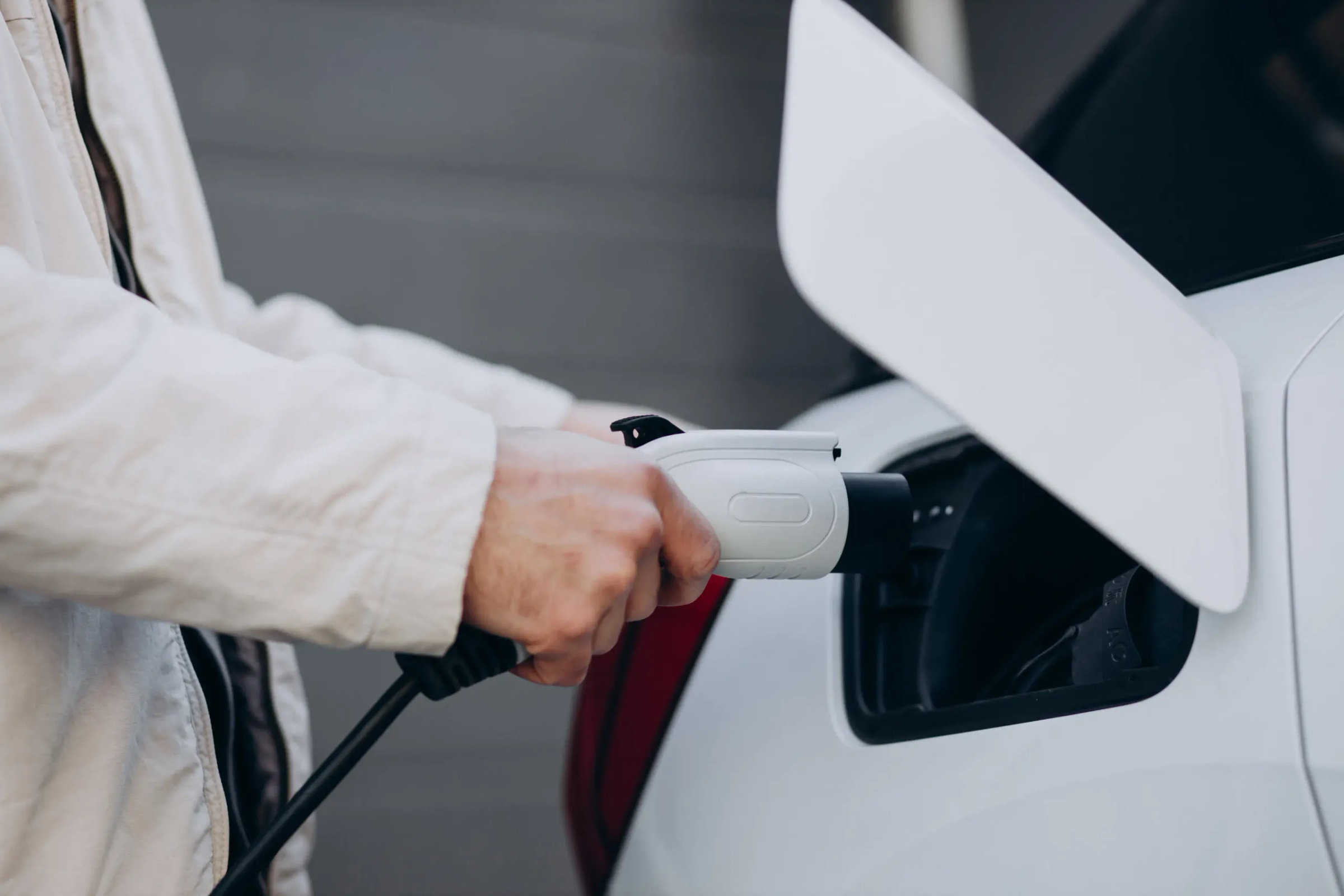
Electric car chargers in the communal car park

A communal car park does not need one installation per resident: it needs a properly sized common infrastructure so that each bay can be connected when its turn comes, without upgrading the building’s power and without chasing the walls again.

The first resident installs. The fifth cannot.

What usually happens in a communal car park is that the installation grows on its own and badly. One resident hires an electrician, runs their line from the meter and fits their charger. Months later another does the same on their own, with a different route and a different criterion. By the fourth or fifth, the car park is a tangle of cables running every which way and there is no power left.

From then on, every new resident finds that the options are upgrading the building’s power, which is expensive and slow, or giving up. And undoing what has been done costs more than doing it properly from the start.

The problem is not technical, it is one of order: nobody designed the infrastructure for the whole car park, only for the first bay.

One infrastructure for the whole car park, not one charger for one resident

  • Survey of real power

    We measure what headroom the building’s supply has and how many points it admits with balancing, before proposing any upgrade.

  • Common infrastructure

    Ducting and main line sized for the whole car park. Every resident who joins later only has to run a spur to their bay.

  • No works for those who do not want a charger

    The infrastructure is installed once and does not affect the use of anyone else’s bay.

  • Individual meter per bay

    Each resident pays for their own consumption. No shared levies and no arguments at the general meeting about who charges more.

  • Commissioning and registration

    Configuration, testing and documentation handed over to the building manager and the association.

  • Later extensions

    New bays connected without redoing anything and without calling another general meeting.

What decides whether the car park takes ten chargers or two

Balancing: the alternative to upgrading the building’s power

It is the question that sinks most projects in an association, and it is almost always framed wrongly. You do not need 7.4 kW multiplied by the number of bays, because the cars do not all charge at once and do not need a full charge every night. With dynamic balancing, the system shares the available power between the points active at any moment and respects the limit of the building’s supply.

In practice that turns a car park that “has no power” into one that takes far more points than the association believed, without touching the contract with the distribution network operator.

Pre-installation: doing it once, for twenty years

Installing the ducting and the main line for the whole car park costs little more than doing it for one bay, and it stops every new installation being a building job. It is the difference between an association where connecting a new bay is a formality and one where it is a conflict.

What the installation hangs off

There are two routes and they do not give the same result. Hanging off a supply dedicated to charging allows the whole to be managed, metered per bay and extended in an orderly way. Hanging off each resident’s own home ties the installation to their individual contract, complicates balancing across the whole and limits growth. In the technical survey we propose the one that fits the building and explain why.

Each resident pays their own, and nobody argues at the meeting

It is the second reason these projects get stuck, after power. The answer is not a split by ownership share, nor a levy: it is individual metering.

Each bay has its own consumption record. The resident pays exactly the energy they have used and the association neither advances anything nor absorbs anyone’s cost. If the association also wants to open a bay to visitors or manage access by profile, that is configured from the platform.

What the law says and what you can recover

No general meeting approval is needed

Spanish horizontal property law allows a charge point for private use to be installed in your own bay without an agreement: prior notice to the association is enough. An agreement is required where the installation is for shared use.

Certification

The installation is registered with the competent authority of the region, with the certificate from the authorised installer. We handle it.

Incentives

Calls under Plan MOVES used to include installation in residents’ associations, with amounts and deadlines set by each region. It is worth knowing that this programme is no longer open: MOVES III stopped accepting applications on 31 December 2025, and the Auto+ Programme that replaces it only subsidises the purchase of the vehicle, not the installation. The one national scheme that does fund infrastructure, MOVES Corredores de Recarga, is aimed at operators of publicly accessible charging alongside eligible stretches of road, and its first application window closed on 10 February 2026. For an installation of your own, today you have to look at the regional schemes, which neither open at the same time nor cover the same things.

How we work

  1. Technical survey · at no cost

    We visit the site, measure the power available in the supply and define which solution fits. With no commitment.

  2. Proposal and sizing

    We size for what you will need five years from now, not for what you need today. Extending later costs more than planning for it now.

  3. Permits and certification

    Technical report or full project, certification before the authorities, and dealings with the distribution network operator if the power needs upgrading. We handle it.

  4. Build

    Works, assembly and real charging tests with a vehicle.

  5. Commissioning

    Tariff and access permission configuration, registration on the management platform and handover of the full documentation. From here the network is live and monitored.

We install in order to stay

On commissioning day everything works. The problem shows up later: the connection drops, a user forces the connector, the firmware falls behind, the electricity tariff changes and nobody adjusts the prices.

That is why we monitor every point we install and respond to any incident without waiting for your call.

Frequently asked questions

Can I install a charger in my bay without the association’s permission?

Yes, if it is for your private use in your own bay. Spanish horizontal property law only requires prior notice to the association, not approval at a general meeting. An agreement is needed where the installation is for shared use or materially affects common elements.

Does the building’s power have to be upgraded?

In most cases, no. Dynamic balancing shares the available power between the points charging at any moment, respecting the limit of the supply. We only propose an upgrade when the expected simultaneous demand exceeds the real headroom, and in that case we file the application with the distribution network operator ourselves.

Who pays for each charger’s electricity?

Each resident pays their own. The installation has individual metering per bay, so consumption is billed to whoever generates it. The association does not advance the cost or split it by ownership share.

And if more residents want to install in two years’ time?

That is exactly the point of sizing the common infrastructure from the start. When somebody joins, all that is needed is a spur to their bay: no new works, no new ducting and no going back to a general meeting.

Does the association have to contract maintenance?

It is not compulsory, but it is advisable as soon as there are several points. A charger that goes down in a communal car park is noticed by nobody until a resident cannot charge, and the complaint ends up with the building manager.

Is your car park ready, or does it just have a charger?

Technical survey at no cost to the association. We measure the available power, work out how many bays the building takes and tell you which incentives you can apply for.

Contact us