
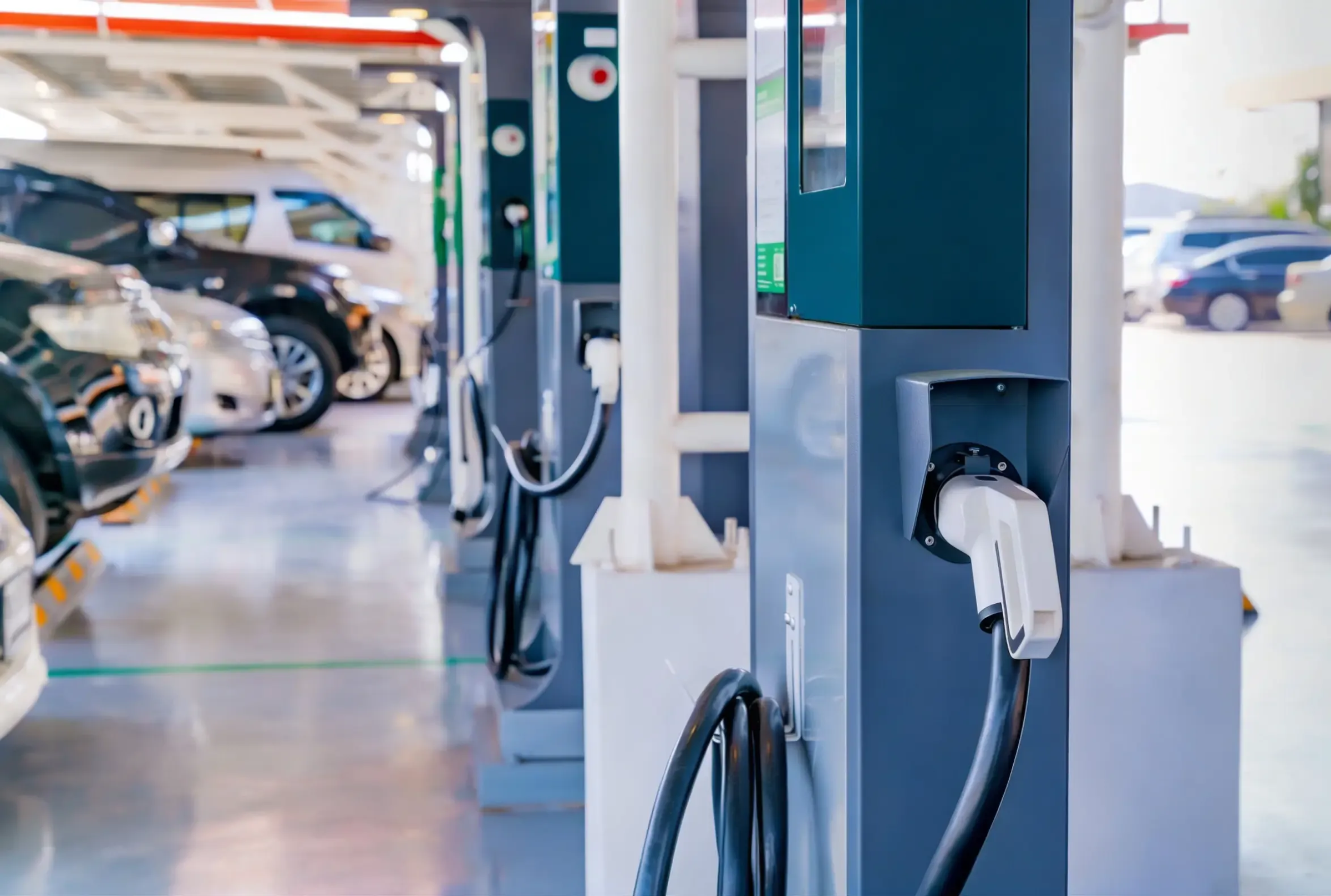
Electric car chargers for shopping centres and retail

An electric driver chooses where to shop by where they can charge. We install the points, operate them and bill, so that the car park goes from being a cost to being a reason to come.

Two bays taken all day by the same car

The most common failure in retail is not about power: it is about turnover. Two or three points are installed, placed in the best bays, and by ten in the morning they are already taken. Sometimes by cars that are charging; very often by cars that finished hours ago and are still plugged in, or simply by cars parked there because the bay is well placed.

The result is the worst of both worlds: the investment serves almost nobody and generates complaints from the customers who did want to charge.

And there is a second mistake, a more expensive one: sizing by the number of bays in the car park instead of by real turnover. A shopping centre does not need to charge all its visitors, it needs to cover those arriving in electric cars during peak hours.

Points that turn over and run themselves

  • Sizing by turnover

    How many points are needed according to visits, average length of stay and real peak hours.

  • Occupancy fee

    An extra charge when the car stays connected after charging. It is what frees bays without anybody having to go and tell them.

  • Automatic billing

    The customer pays from their phone. Your team does not get involved and there are no tickets or validations to handle by hand.

  • Validation by purchase

    If you want, charging can be free or discounted for anybody who buys. It is configured as one more rule.

  • Signage and bay control

    So that the charging bay is for charging, not for parking somewhere convenient.

  • Visibility

    Your points appear in the charging apps the driver already uses, and that brings visits you did not have.

Three decisions specific to retail

Medium power, not rapid: the length of stay rules

The average visit to a shopping centre runs to an hour or two. With that window, medium-power charging is what fits: it recovers enough for the customer to notice the service and it allows several points to be installed on the same power as one rapid unit.

Rapid charging in retail makes sense occasionally, one or two bays for whoever is in a hurry, but as the baseline it multiplies the cost without improving the service.

Turnover is managed with the tariff, not with wardens

It is the most useful lesson from this segment. The way to get a point serving six cars a day instead of one is not putting up signs or sending somebody to give notice: it is that, from the moment charging finishes, staying plugged in costs money. It works on its own and without confrontation.

Growing without digging up the car park again

A retail car park is expensive to work on: it means closing bays, signing the works and inconveniencing the customer. That is why it is worth laying the ducting for the number of points expected five years out and equipping only today’s. The second phase is connecting, not opening up again.

Three ways to frame it, and all three work

They can be combined by time band and changed later without touching anything physical.

Free

As a pure commercial draw. It works with few bays and in centres competing for visits, but without an occupancy fee it ends in blocked bays.

Billed

The customer pays for the energy they use, with the price visible before they start. The installation pays for itself and turnover regulates itself.

Discounted on purchase

The session is discounted or released on validating a purchase receipt. It is what turns charging into a measurable marketing tool, because it lets you know how many visits it has brought.

What has to be complied with and what you can recover

Minimum provision in car parks

The regulation requires a minimum number of charge points in non-residential car parks above a certain size, and shopping centres are among the uses affected. Specifically: in existing buildings, article 4 of Spanish Royal Decree-Law 29/2021 requires one charging station for every 40 parking spaces or part thereof (up to 1,000 spaces, plus one more for each additional 100) in car parks with more than twenty spaces, and its deadline expired on 1 January 2023. For new build and refurbishment the rule is section HE 6 of the Spanish Building Code, which also requires ducting prepared for at least 20 % of the spaces.

Certification

Registration with the region, with a certificate from an authorised installer.

Incentives

Calls under Plan MOVES included publicly accessible infrastructure and commercial car parks. It is worth knowing that this programme is no longer open: MOVES III stopped accepting applications on 31 December 2025, and the Auto+ Programme that replaces it only subsidises the purchase of the vehicle, not the installation. The one national scheme that does fund infrastructure, MOVES Corredores de Recarga, is aimed at operators of publicly accessible charging alongside eligible stretches of road, and its first application window closed on 10 February 2026. For an installation of your own, today you have to look at the regional schemes, which neither open at the same time nor cover the same things.

How we work

  1. Technical survey · at no cost

    We visit the site, measure the power available in the supply and define which solution fits. With no commitment.

  2. Proposal and sizing

    We size for what you will need five years from now, not for what you need today. Extending later costs more than planning for it now.

  3. Permits and certification

    Technical report or full project, certification before the authorities, and dealings with the distribution network operator if the power needs upgrading. We handle it.

  4. Build

    Works, assembly and real charging tests with a vehicle.

  5. Commissioning

    Tariff and access permission configuration, registration on the management platform and handover of the full documentation. From here the network is live and monitored.

We install in order to stay

On commissioning day everything works. The problem shows up later: the connection drops, a user forces the connector, the firmware falls behind, the electricity tariff changes and nobody adjusts the prices.

That is why we monitor every point we install and respond to any incident without waiting for your call.

Frequently asked questions

How many charge points does a shopping centre need?

It is not worked out from parking bays but from turnover: visits per day, average length of stay and the proportion of electric vehicles. Properly sized, a small number of points with good turnover gives better service than many badly managed ones.

How do I stop a car occupying the bay all day?

With an occupancy fee: an extra charge from the moment charging has finished and the vehicle is still connected. It is the standard mechanism, it works on its own and it avoids having to send somebody to give notice.

Can I offer charging free to my customers?

Yes, and you can also discount it on validating a purchase receipt, or bill only above a certain consumption. It is a configuration rule, not an installation decision, so you can change it whenever you want.

Rapid charging or medium?

Medium, in almost every case. With a stay of an hour or two, medium charging covers the need well and allows several points to be installed on the power one rapid unit would consume. Rapid charging makes sense as a complement, in one or two bays.

Does it attract visits or only serve the ones I already have?

Both, if the points are open to the public. They appear in the charging apps drivers consult before deciding where to stop, and that brings visits from people who were not going to come. It is the part usually undervalued when calculating the return.

Does your car park bring customers in, or only park them?

Technical survey at no cost. We work out how many points your real turnover needs and which billing model fits your commercial strategy.

Contact us