
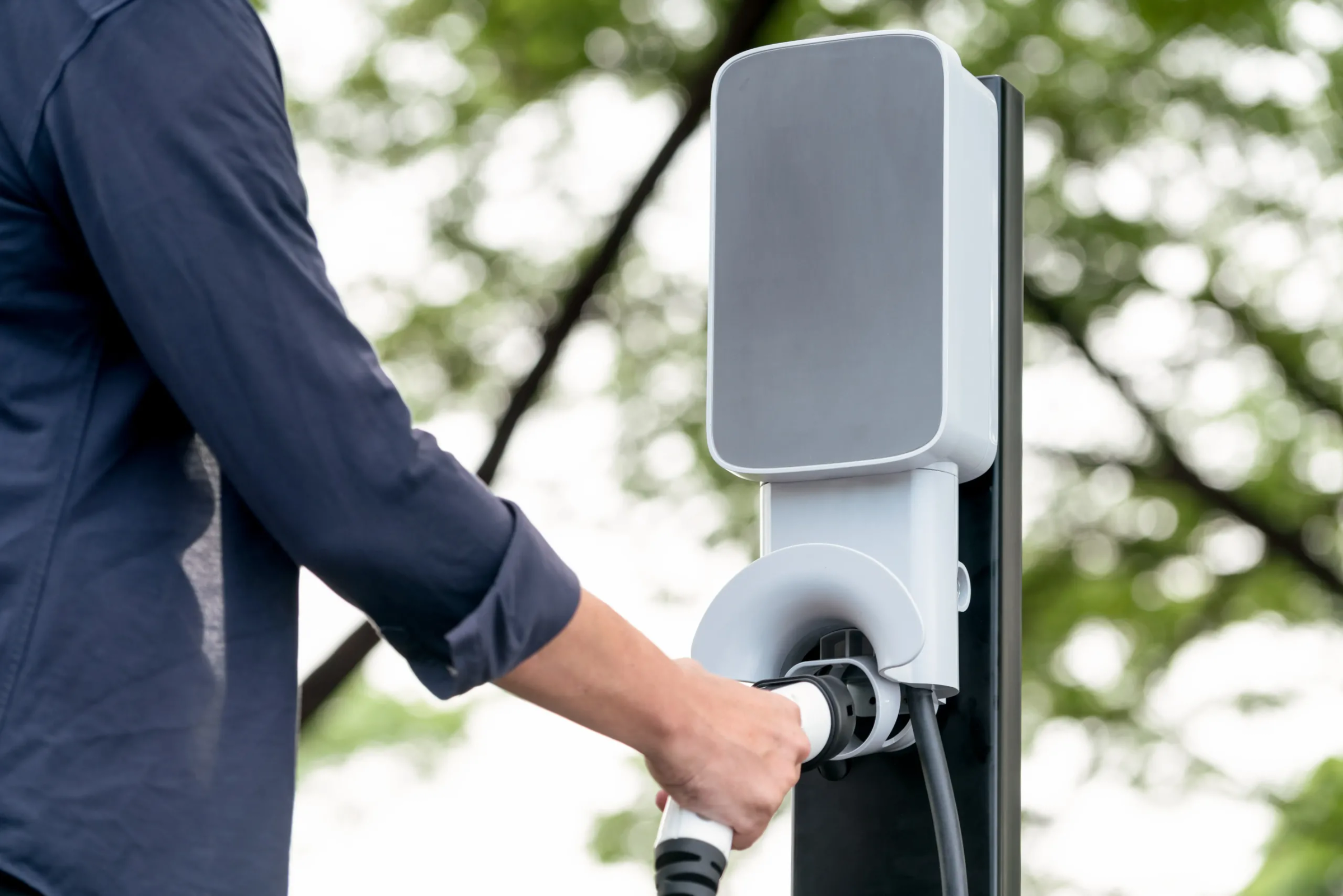
Charge points for single-family homes

Charging at home is what makes an electric car cheap to run: it costs a fraction of public charging and the car wakes up full every day. We install it with the protective devices the regulation requires and without you having to upgrade your contracted power.

A charge point is not a reinforced socket

The domestic installation is where most corners get cut, because it looks simple. An electrician runs a line from the panel, fits the equipment and it works. And it does work, until it stops.

A charge point is a high, sustained load over hours, which nothing else in the house does. It requires its own circuit, specific protective devices and cable sized to the real distance to the garage. When that is not properly resolved, what shows up is breakers tripping in the small hours, charges that stop on their own and, in the worst case, cable working at its limit.

And there is one part that almost never gets done: registering the installation. Without that step there is no grant to apply for and no cover to claim.

The complete installation, not just the equipment

  • A look at your contracted power

    Whether your supply takes the charger as it is, or whether it is better to manage the charge than to upgrade.

  • Dedicated circuit and protective devices

    An independent line from the panel, with the protective devices required by the technical instruction that applies to charging.

  • Cable sized to the real distance

    From the panel to the garage there may be five metres or forty. They are not the same and they are not solved with the same cross-section.

  • Configuration and testing

    A charging test with a vehicle, not just a voltage check.

  • Certification

    Installation certificate and registration with the authority of your region.

  • Paperwork for the grant

    Everything you need to apply for the subsidy, ready to go.

Two things that decide whether the installation is good or only works

You do not need to upgrade your contracted power

It is everyone’s first question and the answer is almost always no. A domestic charger can manage its consumption according to what the rest of the house is using: if the oven and the hob go on, the charger backs off; when they go off, it picks up. The car is plugged in all night, so it does not need to charge at full power the whole time, only to be full by morning.

Upgrading your power means paying a higher standing charge every month of the year for consumption that happens in the small hours. It almost never pays.

The protective devices are not optional

Charging has its own technical instruction within the Spanish low-voltage regulation and requires specific protective measures that a normal domestic circuit does not carry. It is not bureaucracy: it is what stops an insulation fault in the vehicle ending up in the house’s installation. A point installed without it can work for years and still be wrong.

Why charging at home works out so well

The difference between charging at home and doing it on the public network is large, and it shows more the more you drive. At home you pay for the energy at your domestic tariff, and if you have a time-of-use tariff, overnight charging falls in the cheapest band of the day.

Scheduling the charge to start in the off-peak band is free and is configured once. It is the difference between the car being cheap to run and only slightly cheaper than a petrol one.

What has to be filed and what you can recover

Registration of the installation

Every charging installation is documented with the certificate from the authorised installer and registered with the competent authority of your region. Without that step you cannot apply for a grant.

Incentives for private individuals

Calls under Plan MOVES used to include the installation of charge points in private homes, with amounts and deadlines set by each region. It is worth knowing that this programme is no longer open: MOVES III stopped accepting applications on 31 December 2025, and the Auto+ Programme that replaces it only subsidises the purchase of the vehicle, not the installation. For a home installation the national route still in force is the personal income tax deduction; beyond that, some regions keep schemes of their own that have to be checked one by one.

Tax deductions

Certain charging installations have had favourable treatment under Spanish personal income tax. This is today the national route in force for the installation itself: 15 % of what you pay, with a maximum base of 4,000 euros a year (so up to 600 euros), for installing the charging system in a property you own that is not used for a business activity. It covers amounts paid up to 31 December 2026 and is claimed in the tax return for the year the installation is finished. Anything already covered by a grant does not count towards the base.

How we work

In a single-family home the five steps are normally resolved in a single technical visit plus the works.

  1. Technical survey · at no cost

    We visit the site, measure the power available in the supply and define which solution fits. With no commitment.

  2. Proposal and sizing

    We size for what you will need five years from now, not for what you need today. Extending later costs more than planning for it now.

  3. Permits and certification

    Technical report or full project, certification before the authorities, and dealings with the distribution network operator if the power needs upgrading. We handle it.

  4. Build

    Works, assembly and real charging tests with a vehicle.

  5. Commissioning

    Tariff and access permission configuration, registration on the management platform and handover of the full documentation. From here the network is live and monitored.

We install in order to stay

On commissioning day everything works. The problem shows up later: the connection drops, a user forces the connector, the firmware falls behind, the electricity tariff changes and nobody adjusts the prices.

That is why we monitor every point we install and respond to any incident without waiting for your call.

Frequently asked questions

Do I have to upgrade my contracted power to install a charger?

Normally not. The charger can adjust its consumption according to what the rest of the house is using, and since the car spends all night plugged in, it does not need to charge at full power the whole time. Upgrading your power raises the standing charge for all twelve months of the year for consumption that happens in the small hours.

How long does the installation take?

An installation in a single-family home is usually resolved in three days from the technical visit, as long as there is no power upgrade and no ducting work. If a power increase has to be requested from the distribution network operator, they set the timescale.

Can I install the charger myself, or with my usual electrician?

The installation has to be done by an authorised installer who issues the corresponding certificate, because charging has specific protection requirements within the Spanish low-voltage regulation. A circuit done well for something else does not automatically comply for this, and without a certificate there is no registration, no grant and no cover.

Does it work if I have solar panels?

Yes, and that is where it makes most sense. A charger prepared for self-consumption can charge with the surplus instead of exporting it to the grid. But it is a decision taken at the time of installation: adding it later means going back in.

Can I schedule the charge for the cheapest hours?

Yes, and it is the first thing worth configuring. It is set once and the car always charges in the cheapest band of your tariff.

Does your house take a charge point without a power upgrade?

Technical survey at no cost. We look at your panel, your contracted power and the distance to the garage, and we tell you what installation you need and which grant you can apply for.

Contact us