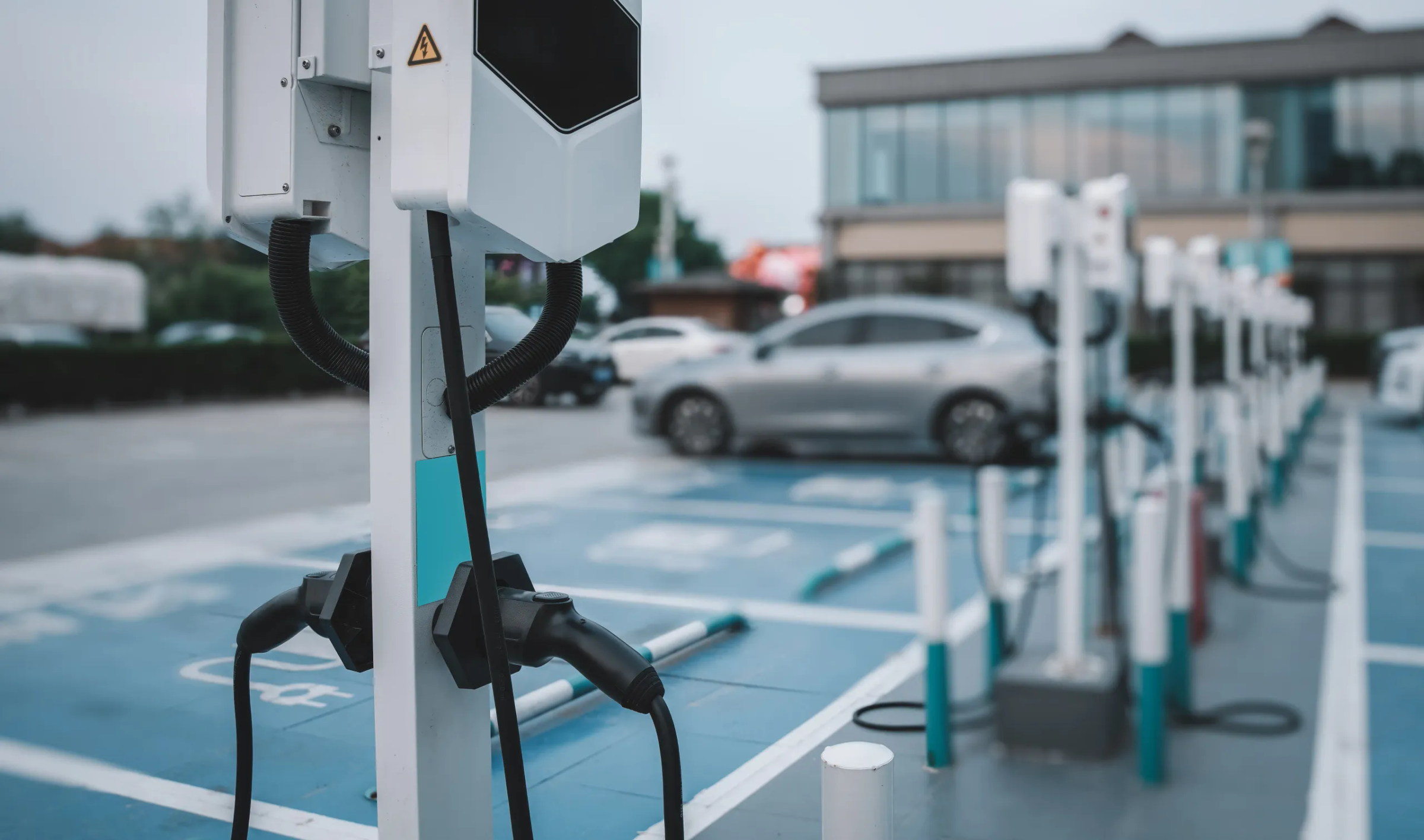
Maintenance and repair of electric car chargers

A charger installed and left unattended ends up out of service. We monitor every point in real time, we spot the incident before your user does, and we resolve it within a timescale committed in the contract.

A charge point does not break on day one. It breaks on day 400.

The installation is the easy part. The hard part starts once the network has been running for a year and nobody is watching it.

The connection to the platform drops and the charger stops reporting. The firmware falls two versions behind and starts failing with newer cars. A user pulls the cable at an angle and the connector is damaged. The electricity tariff changes and the prices are still set as they were last year. The breaker trips on a Sunday and nobody resets it until Monday.

None of those things generates a call to the installer. They generate a user who arrives, cannot charge and does not come back.

It is not enough for the infrastructure to exist. It has to work.

What maintenance covers

  • Continuous monitoring

    The status of each point in real time, with an automatic alert on failure, disconnection or power degradation. We do not wait for your call.

  • Preventive maintenance

    Scheduled periodic inspection: condition of connectors and cabling, protective devices, tightness of connections, cleaning and verification of communications.

  • Corrective maintenance

    Incident resolution within a committed timescale. Most are closed remotely; when it is needed, we go.

  • Firmware updates

    Chargers are updated like any connected equipment. We manage the versions so that the network stays compatible with the vehicles that keep arriving.

  • Warranty and spare parts management

    We handle whatever is under warranty with the manufacturer and keep wear parts available.

  • Tariff and configuration review

    If the price of energy changes and the tariff does not, the network loses money on every session. We review it.

From the alert to the resolution

  1. Automatic detection

    The platform detects the outage, the loss of communication or the power degradation and opens the incident by itself. In most cases we know before the charger’s user does.

  2. Remote diagnosis

    We review the session history, the equipment logs and the state of communications. We determine whether it is a network, configuration, firmware or hardware problem.

  3. Resolution

    Most incidents are closed without a site visit: remote restart, configuration fix, firmware update. Where there is physical failure, the visit is scheduled within the SLA timescale.

  4. Closure and record

    Every incident is documented: cause, action taken and time to resolution. That history is what makes it possible to anticipate the next failure instead of repeating it.

What is worth understanding before signing a maintenance contract

Why a charge point fails

The three most frequent causes are not electrical. The first is communications: the charger loses its connection and, even though it physically works, it can no longer start sessions or report. The second is the connector, which is the real wear part of the installation and suffers every time a user pulls the cable at a bad angle. The third is out-of-date firmware, which starts causing compatibility problems with vehicles that did not yet exist when the equipment was installed.


Network operation and management

Preventive and corrective are not the same, and both are needed

A corrective-only contract is paid once something has already broken and the user has already left. Preventive costs less and avoids most of the expensive failures: checking protective devices, tightening connections, condition of connectors and verification of communications. Our contracts include both, with a number of scheduled inspections per year and a response to incidents.

We maintain what we did not install

The network does not have to be ours. If you have points installed by somebody else and with no real support, we start with an audit of their condition: equipment inventory, firmware versions, state of communications, protective devices and connectors. That produces a report with what has to be fixed before an SLA can be committed to.

What the law requires you to maintain

A charging infrastructure is not just a piece of equipment: it is an electrical installation subject to the Spanish low-voltage regulation and its ITC-BT-52 instruction, with obligations attached. We manage them so that they do not depend on somebody remembering.

Periodic inspections

Certain installations are subject to inspection by an accredited inspection body at a set frequency. The reference is ITC-BT-05 of the Spanish low-voltage regulation, section 4. Its point 4.1.h subjects to initial inspection any charging station that needed a full project in order to be built, and 4.2 adds the consequence that tends to be overlooked: every installation that required an initial inspection then undergoes a periodic inspection every five years, carried out by an accredited inspection body. Communal installations in residential buildings with more than 100 kW installed go every ten.

Metrological control

Equipment that bills energy to the user is subject to metrological control. The reference is Spanish Order ITU/1475/2024, which since 16 January 2025 has brought charging stations intended for the commercial sale of energy under State metrological control, amending Order ICT/155/2020. In practice: if you charge per kWh, the equipment has to be subject to that control.

Installation documentation

Installation certificate, technical report or project, and registration before the competent authority of the region, kept up to date after any modification.

We maintain networks of any size

From a residents’ association with four bays to a network spread across several provinces, with one technical contact and one contract.

What you will see every month

The monthly report is not a list of incidents. It is the picture of whether your investment is paying off: real availability of each point, completed and failed sessions, energy delivered, revenue if the network bills, and the incidents with their time to resolution.

That is what the next decision is made with: where power is short, which point is worth replacing and when it makes sense to extend.

98.6%

Average network availability

+3,000

Charge points under maintenance

24 hours

Average time to resolution

Frequently asked questions

What happens if a charger stops working?

The platform detects the outage and opens the incident automatically, usually before anyone reports it. We act within the timescale of the contracted SLA. Most incidents are resolved remotely, with no site visit and without the point spending long out of service.

Do you maintain chargers installed by another company?

Yes. We start with an audit of the state of the network: equipment inventory, firmware versions, communications, protective devices and connectors. With that report we know what has to be corrected before a service level can be committed to, and from there the contract is the same as for a network we installed ourselves.

How often does a charge point need preventive maintenance?

It depends on use and on the setting. A point in a communal car park with four sessions a day does not behave like one in a service station with forty, nor does one indoors behave like one out in the weather. In the initial survey we set the number of inspections per year according to real use, and it is fixed in the contract.

Does maintenance include parts?

We handle the manufacturer’s warranty for whatever is covered and keep wear parts available. What is included in the fee depends on the level you have contracted: the most complete covers any charger failure, parts included.

What is the difference between maintenance and network management?

Maintenance is about the equipment working: monitoring, preventive, corrective and firmware. Management is about the network operating: tariffs, billing, user access, roaming and reporting. They are two different services and can be contracted together or separately.

Do I need a maintenance contract if the charger is under warranty?

The manufacturer’s warranty covers a defect in the equipment, not the availability of your network. It does not monitor, it does not restart a charger that went down on a Sunday, it does not update firmware, it does not check protective devices and it does not adjust tariffs. They are different things and the warranty does not replace maintenance.

Can you maintain points spread across several provinces?

Yes. Monitoring is remote, so the reach does not depend on distance, and for on-site work we use our own coverage and a network of partners. We reach the whole of Spain, southern Europe and Latin America.

Is your network maintained, or only installed?

If you have charge points with no real support, we start with an audit of their condition. We tell you what is there, what state it is in and what it would take to commit to a service level.

Contact us

We reply within 10 minutes during working hours · info@evenergia.com