
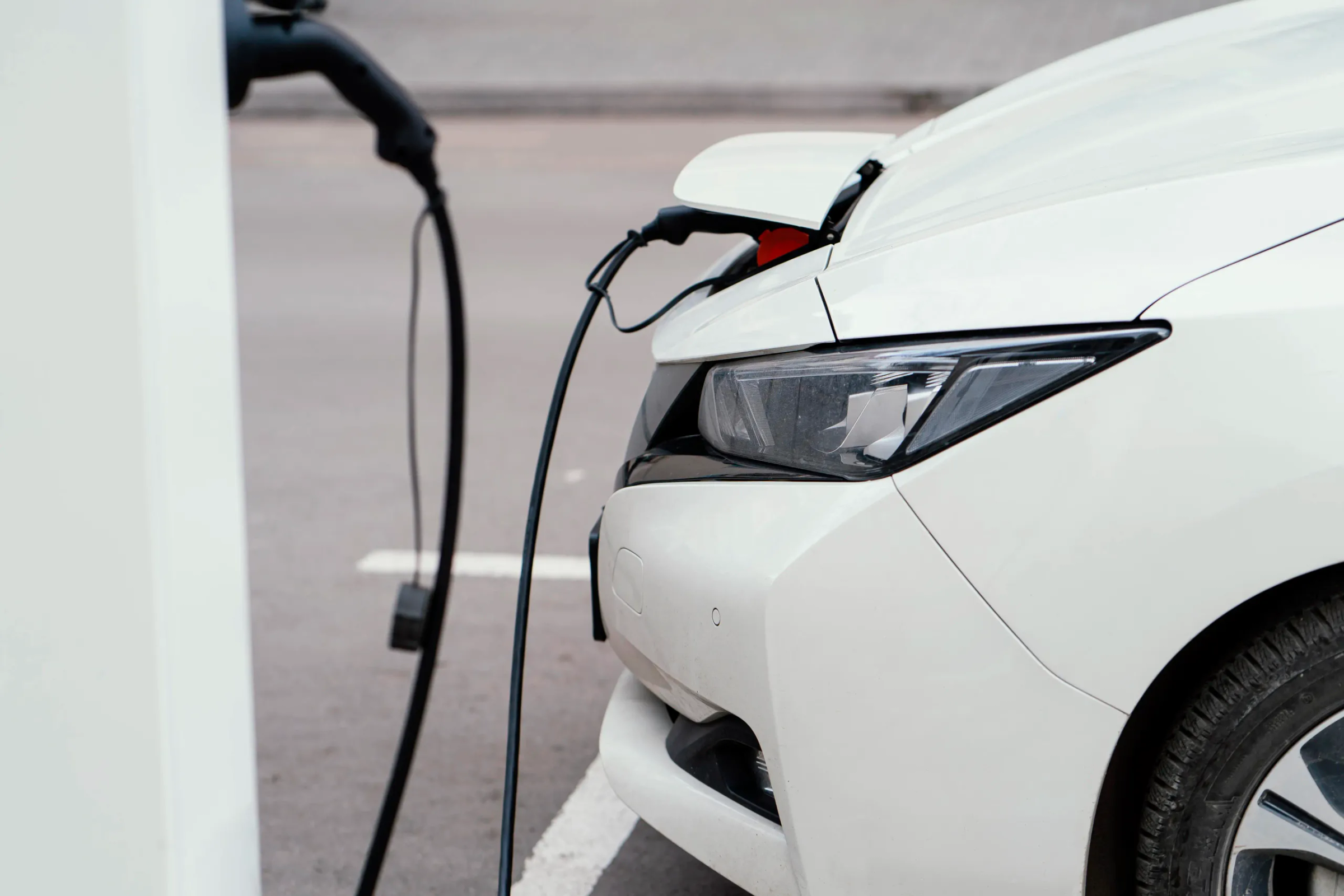
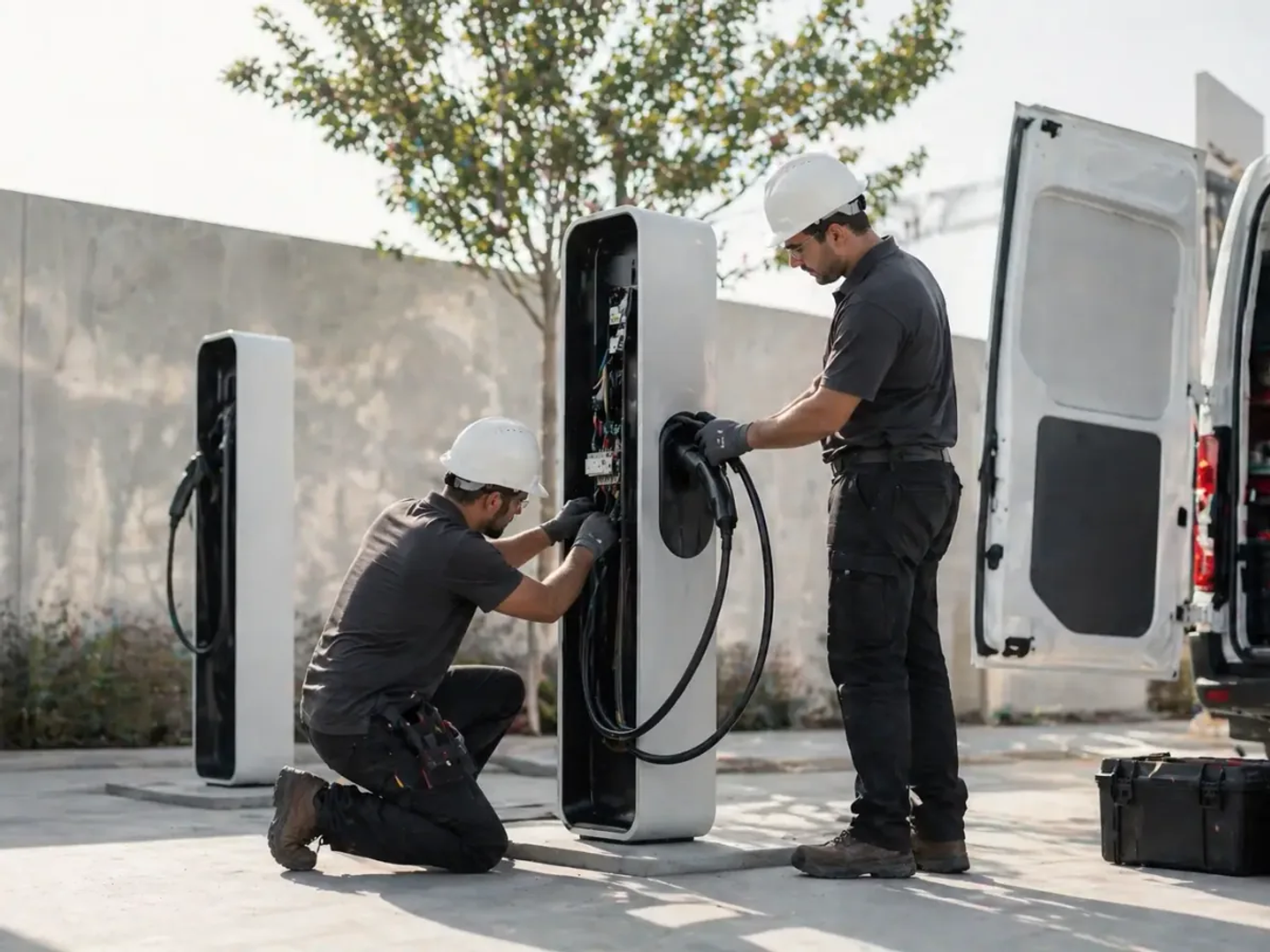








EV charger installation across Spain

We assess the power you have available, size the installation for what you will need five years from now, and build it with certification and the distribution network paperwork included. Afterwards we are still there.

Most installations fall short before they pay for themselves

A badly sized charge point does not fail on day one. It fails when the second neighbour buys an electric car, when the fleet goes from four vans to twelve, or when the hotel finds its two charging bays taken every night in August.

That is the most expensive mistake in the sector: installing for today’s demand instead of for the demand five years out. Extending later costs far more than planning for it, because it usually means opening the trenches again, redoing the ducting and, in the worst case, applying for a power upgrade that could have been avoided.

The other two common mistakes are just as avoidable: installing without certifying (which leaves the installation outside the regulation and possibly outside the building’s insurance) and choosing hardware that only talks to its own manufacturer’s software, which ties the network to one vendor for good.

The cost of an installation is not what you pay to install it. It is what you pay when you want to extend it.

A complete installation, not just the charger on the wall

We work to a fixed scope. These seven items are always in the project, with no line items appearing halfway through the work.

Survey of available power

We measure the actual supply and work out how much capacity is free before proposing anything.

Sizing with room to grow

We define the installation for the demand expected, not just for the points of the first day.

Ducting and civil works

Prepared to extend without opening up again.

Technical report or full project

Depending on the power of the installation, in line with ITC-BT-04.

Certification before the authorities

Electrical installation certificate and registration in the corresponding region.

Dealings with the distribution network operator

Power modification or new supply where needed.

Commissioning and platform registration

Testing, tariff and access configuration, and documented handover.

How we work, phase by phase

  1. Technical survey · at no cost

    We visit the site, review the electrical panel and measure the available power. With that we tell you how many points fit, at what power, and whether the supply needs upgrading. We leave with a number, not a range.

  2. Proposal and sizing

    We define the installation scheme. ITC-BT-52 allows several possible configurations in communal car parks (from an individual feed off each meter to a collective circuit with its own meter) and the choice drives both the initial cost and how easily it can be extended later. We explain which one we propose and why.

  3. Permits and certification

    We handle the whole file: technical report or full project depending on power, electrical installation certificate, registration before the competent authority in your region and, where applicable, the power modification request to the distribution network operator. Each region has its own procedure and its own timescales.

  4. Build

    Installation, ducting and wiring. We coordinate with the owner or the building manager to keep disruption to the car park to a minimum. The work itself runs from about three days in a single-family home to a week on a project that involves building work and permits.

  5. Commissioning

    Real charging tests, tariff and access permission configuration, registration on the management platform and handover of the full documentation. From here the network is live and monitored.

Installation in a communal car park, a single-family home or a business

A residents’ association needs to share power between bays without upgrading the supply. A service station needs its rapid charging available 100 % of the time. A hotel needs the guest to be able to charge without signing up to any app. They are not solved the same way.

What is worth deciding before installing

Power: how much you actually need

An average electric vehicle recovers far more in eight hours of overnight charging at 7.4 kW than it covers on a normal day. For private and employee charging, AC charging at 7.4 kW single-phase or 11-22 kW three-phase covers practically every case.

DC rapid charging makes sense where turnover is high and the stop is short: service stations, transit corridors, fleets on back-to-back shifts. It is a bigger investment with far higher power requirements, so we only propose it when the usage pattern justifies it.

Load balancing: the alternative to upgrading the supply

The question we get most often is whether the contracted power has to be upgraded. In most cases, no. With dynamic load balancing the system shares the available power between the points charging at any given moment and adapts delivery in real time to what the rest of the building is consuming.

That allows more points to be installed than the contracted power would admit if they all charged at full capacity at once, which in practice almost never happens.

Hardware: why we do not tie you to a manufacturer

We install chargers that communicate over the OCPP standard. That means the network can be managed from our platform or from any other compatible one, and that you can extend it in the future with another manufacturer’s equipment without redoing anything.

A charger that only talks to its own manufacturer’s software is a decision you pay for three years later.

Certified, not just installed

A charging installation has to comply with the Spanish Low Voltage Electrotechnical Regulation and, in particular, with ITC-BT-52, which deals specifically with electric vehicle charging infrastructure. It also has to be registered with the industry authority of the region.

That registration is not optional. Without it the installation is outside the regulation, may not be covered by the building’s insurance and, where incentives are concerned, does not qualify.

The procedure changes from one territory to another: different administration, different portal, different documentation and different timescales. We handle the complete file in any of them.

A good part of the installation can be subsidised

National plans and regional programmes cover a meaningful share of the installation cost, but each region runs its own call with its own deadlines, its own paperwork and its own budget. We file the application and follow it through to the decision.

One condition first: the installation has to be properly certified. It is the most common reason a grant is refused.

We install in order to stay

On commissioning day everything works. The problem shows up later: the connection drops, a user forces the connector, the firmware falls behind, the electricity tariff changes and nobody adjusts the prices.

That is why we monitor every point we install and respond to any incident without waiting for your call. We are not an installer that hands over and disappears.

Frequently asked questions about the installation

How much does it cost to install a charge point?

It depends on the distance from the electrical panel, the type of installation and the power. An individual installation in a single-family home and a collective installation in a sixty-bay car park have nothing in common. In the technical survey we give a fixed price, with civil works and permits included, so that no line items appear halfway through the project.

Does the contracted power have to be upgraded?

In most cases, no. Dynamic balancing shares the available power between the active points and adapts delivery to the building’s real consumption. We only propose an upgrade when the expected simultaneous demand exceeds the available headroom on a sustained basis, and in that case we file the request with the distribution network operator.

How long does the installation take?

The build itself is usually quick. What sets the overall timescale is the paperwork: design, certification before the authorities and, where applicable, dealings with the distribution network operator. An installation in a single-family home is usually completed in three days; a project in a residents’ association or a business, in a week.

Can it be installed in a residents’ association without a general meeting vote?

For private use in your own bay, yes. Spanish horizontal property law allows the installation with prior notice to the association, without approval at a general meeting. Where the installation is for shared use between several owners, an agreement is required.

What if I want more points later on?

It depends on how the original installation was sized. We prepare the ducting and the electrical scheme to admit extension, so that adding a point is a matter of connecting and configuring, not of opening up the car park again.

Which charger manufacturers do you work with?

We work with OCPP-compatible equipment, which is the sector’s communication standard. We select the model according to the case (power needed, installation conditions, exposure to the weather) and we do not tie the network to a single supplier.

Can you install outside Spain?

Yes. We work across southern Europe and Latin America. We manage networks spread over several countries from a single platform.

Let us start by finding out what power you have

The technical survey has no cost and no commitment. We come away with a number of points, a power figure and a fixed quote.

Contact us

We reply within 10 minutes during working hours · info@evenergia.com