
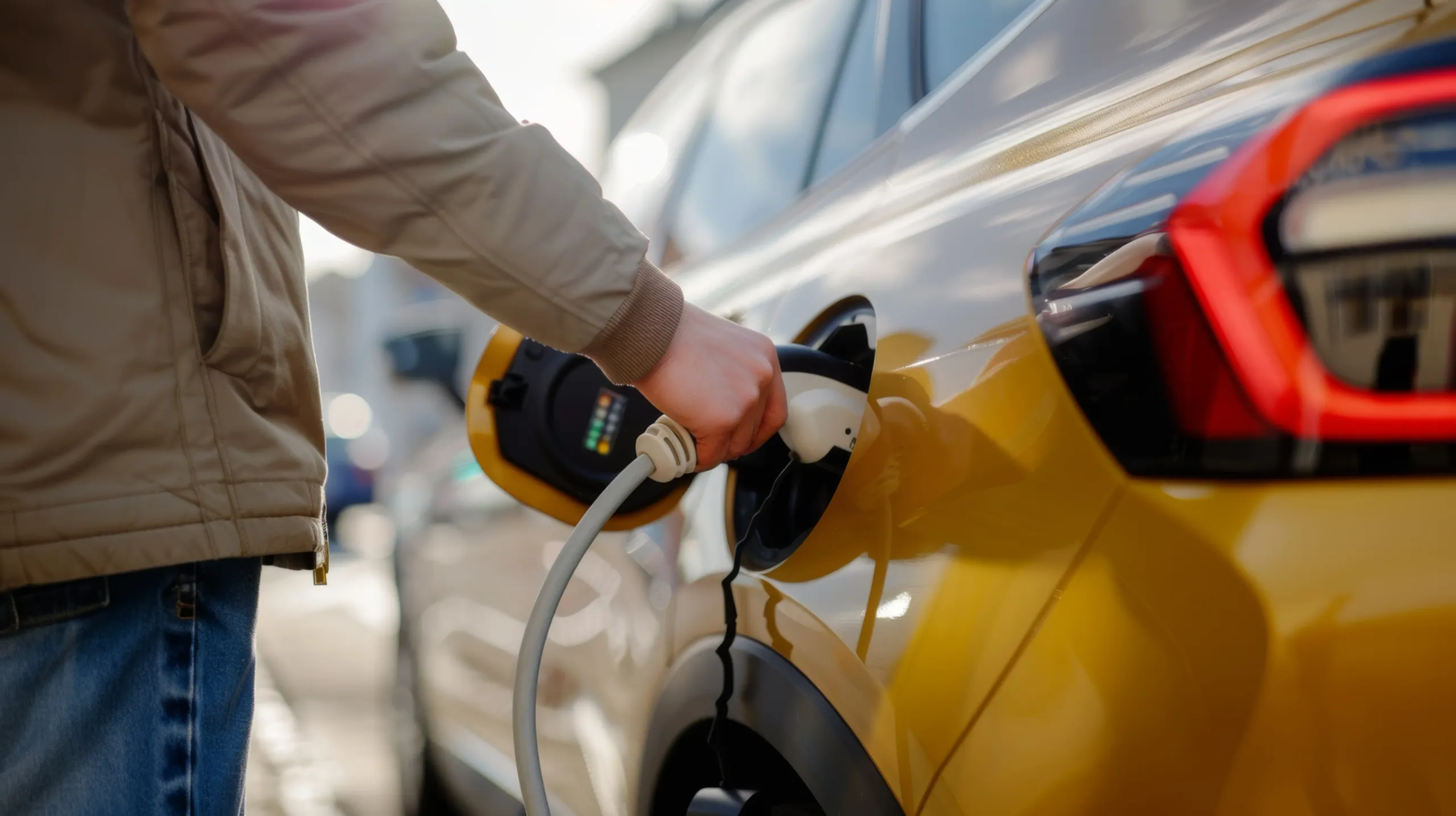
Rapid electric car chargers at petrol stations

At a service station charging is not an added service: it is the replacement for the pump. And that changes the whole project, because what decides whether it goes ahead is not the charger, it is the grid connection.

The charger is the cheap part. The grid connection is the project.

Anyone considering rapid charging usually starts by asking for equipment quotes. That is the easy part, and it is not where the problem is.

A real rapid charge point needs a level of power that almost no service station has contracted, because a classic petrol station consumes little: lights, shop and pumps. Going from there to several hundred kilowatts means talking to the distribution network operator, and that is where the timescales, the connection rights and, frequently, the need for a substation of your own appear.

The result is that many projects stall not because the business does not work, but because nobody studied the grid before deciding on the equipment. And by the time the operator’s answer arrives, decisions have already been taken that do not fit.

From the grid study to the first billed session

  • Grid study first of all

    What power is available at your connection point and what would be needed for what you want to install. It is the first step, not the last.

  • Dealings with the distribution network operator

    Access and connection application, rights and timescales. We handle it and give you a realistic calendar.

  • Civil works and substation

    Where needed, sized and built as part of the same project.

  • Installation and commissioning

    Equipment, signage, protective devices and real charging tests.

  • Operation and billing

    Tariffs, billing to the driver, roaming and settlement. Your staff take no part in any session.

  • Committed availability

    Continuous monitoring and an SLA. A rapid charge point out of service is a pump that is closed.

Three decisions that define whether the project is viable

Available power rules over everything else

Before choosing a single piece of equipment you have to know what the grid can give you at that specific point. The answer determines how many points fit, at what power, whether a substation is needed and how long it all takes. Two stations ten kilometres apart can get completely different answers.

That is why the grid study is the first deliverable of the project, not a later formality.

Storage: charging fast without contracting so much power

When the grid cannot deliver or the timescales are unworkable, there is an alternative that changes the equation: a storage system that charges continuously at low power and delivers high peaks when a vehicle arrives. It allows rapid charging on a much smaller connection.

It does not fit every case — it depends on the number of daily sessions and how they are distributed — but in stations with demand concentrated in certain bands it can be the difference between doing the project and not doing it.

We offer it, and we size it in the technical survey against the real session profile of your station: it is the only way to know whether it beats upgrading the connection.

Availability is the product

In rapid charging, a point out of service is not an inconvenience: it is a lost sale and a driver who does not come back. Unlike a communal car park, there is no alternative here: the user is passing through and goes to the next one.

That is why maintenance in this segment is not an accessory contract, it is part of the project. Continuous monitoring, a committed response time and spare parts available.

Maintenance with an SLA

Where the margin is

At a service station charging has a particularity the other segments do not: the driver stays between fifteen and forty minutes, and does not stay in the car.

That time is the real asset. A pump user spends four minutes and leaves; a rapid-charging one goes into the shop, has a coffee and eats. For many stations, the margin on charging lies less in the kilowatt sold than in what happens while it is being sold.

That drives decisions that are not electrical: where the points sit in relation to the shop, what signage there is and whether the space is designed for waiting or only for refuelling.

What has to be complied with and what you can recover

Obligation to install

The regulation requires service stations to have charging infrastructure above certain annual sales volumes. The reference is article 15 of Spanish Law 7/2021. Sites selling 10 million litres or more of petrol and diesel A have to install at least one DC point of 150 kW or above, and those selling between 5 and 10 million, at least one of 50 kW or above; sites built or refurbished since 2021 already start at 50 kW. From July 2026 the bar rises: anyone above 10 million litres moves to a charging bank of 400 kW or more (600 kW from 2027 sales onwards), always with at least one individual point of 150 kW. That deadline is twenty-one months from the publication of the rulings setting out which sites are covered, and as of today they have not been published.

Certification and grid access

Registration of the installation with the region and the access and connection application with the distribution network operator.

Incentives

Calls under Plan MOVES included publicly accessible charging infrastructure, with higher amounts for high power. It is worth knowing that this programme is no longer open: MOVES III stopped accepting applications on 31 December 2025, and the Auto+ Programme that replaces it only subsidises the purchase of the vehicle, not the installation. The one national scheme that does fund infrastructure, MOVES Corredores de Recarga, is aimed at operators of publicly accessible charging alongside eligible stretches of road, and its first application window closed on 10 February 2026. For an installation of your own, today you have to look at the regional schemes, which neither open at the same time nor cover the same things.

How we work

In this segment step 1 always includes the grid study, and step 3 can set the overall timescale of the project.

  1. Technical survey · at no cost

    We visit the site, measure the power available in the supply and define which solution fits. With no commitment.

  2. Proposal and sizing

    We size for what you will need five years from now, not for what you need today. Extending later costs more than planning for it now.

  3. Permits and certification

    Technical report or full project, certification before the authorities, and dealings with the distribution network operator if the power needs upgrading. We handle it.

  4. Build

    Works, assembly and real charging tests with a vehicle.

  5. Commissioning

    Tariff and access permission configuration, registration on the management platform and handover of the full documentation. From here the network is live and monitored.

We install in order to stay

On commissioning day everything works. The problem shows up later: the connection drops, a user forces the connector, the firmware falls behind, the electricity tariff changes and nobody adjusts the prices.

That is why we monitor every point we install and respond to any incident without waiting for your call.

Frequently asked questions

What power is needed for rapid charging at a petrol station?

It depends on how many points you want and at what power. The important thing is that the answer does not come from us: it comes from the grid at your specific connection point. That is why the first step of the project is the access study, and why two nearby stations can be viable in very different ways.

How long does a rapid charging project take?

The installation is the short part. The timescale is set by the access and connection process with the distribution network operator, and where applicable by building the substation. In the initial survey we give you the realistic calendar, including that part, which is the one that usually comes as a surprise.

Is a substation needed?

In many rapid charging cases, yes, because the power required exceeds what can be delivered at low voltage. It is determined in the grid study, and if the answer is yes, it goes into the project as one more item.

Can I install rapid charging if the grid cannot give me the power?

Sometimes yes, with storage: a system that accumulates energy continuously at low power and delivers it in peaks when a vehicle arrives. It does not fit every case, it depends on the number of sessions and how they are spread, but it is worth assessing before writing the project off.

Who bills the driver?

The session is billed through the platform at the moment of charging, with the price visible before it starts. Your staff take no part, and you receive the settlement with the full breakdown.

And if the charger fails on a Sunday?

That is exactly the scenario that makes maintenance in this segment come with an SLA and not as an extra. Monitoring detects the outage by itself and we act within the committed timescale, without waiting for somebody to report it.

Do you know what power the grid gives you at your station?

We start there. Access and connection study at no cost: we tell you what is viable at your specific point, on what timescales and with what investment.

Contact us